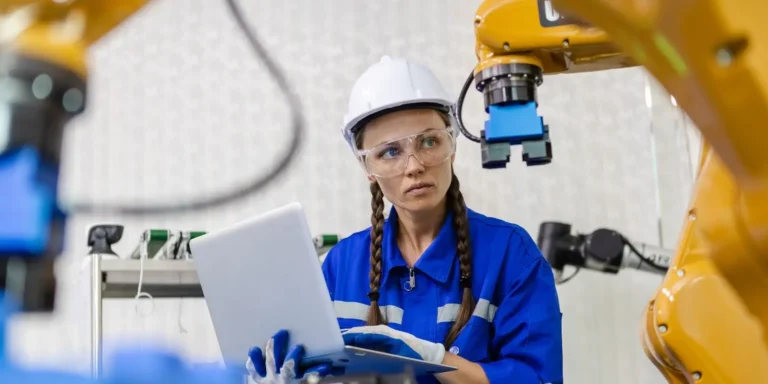
AI in industrial processes helps optimise production, anticipate machinery failures and improve quality control through continuous data analysis. Using information from equipment and management systems, companies can adjust parameters in real time, plan maintenance more effectively, detect defects faster and reduce waste.
The role of Artificial Intelligence in industrial transformation
Artificial intelligence is changing how industrial companies manage production, maintenance and quality. Its ability to process large volumes of information makes it possible to identify patterns, anticipate problems and recommend adjustments that would be difficult to detect through manual reviews.
Machines, sensors, production lines and management systems continuously generate data. AI can connect this information to provide a clearer understanding of equipment performance, adjust parameters in real time, reduce waste and adapt production to changes in demand. It helps create more flexible, efficient and sustainable processes, improves decision-making and enables companies to respond more quickly to changing situations.
Artificial intelligence and automation deliver real value when integrated into a solid and connected enterprise platform. The Oracle ecosystem enables you to unify data, processes, and cloud applications to optimize financial management, automate operations, and accelerate your company’s digital transformation.
As an official Oracle partner, at Acevedo we support you in the strategic implementation of solutions such as Oracle NetSuite, Oracle Cloud ERP, and Oracle APEX, adapting each project to your organization’s complexity and growth objectives.
- 01. Oracle NetSuite – Cloud ERP for growing businesses
- 02. Oracle Cloud ERP – Advanced financial and operational management
- 03. Oracle APEX – Agile enterprise application development
- 04. Native integration with AI and automation
- 05. Security, scalability, and continuous cloud updates
AI for optimising industrial production
AI can analyse data from machinery, sensors and production lines to identify inefficiencies and improve process performance.
- Real-time process and parameter adjustment: AI models can monitor variables such as temperature, pressure and material usage. When they detect a deviation, they help adjust the relevant parameters to maintain performance.
- Demand-based production planning: By analysing sales history, seasonality, orders and market trends, AI can anticipate changes in demand and organise manufacturing, shifts, available capacity and materials, helping to avoid both overproduction and shortages.
- Waste reduction and resource optimisation: AI helps identify the stages where more raw materials, energy or time are being used than necessary. It can then suggest improvements to reduce waste, avoid rework and align resource use with actual production volumes.
Predictive maintenance with artificial intelligence
AI provides a clearer view of the actual condition of machinery, anticipates potential breakdowns before they cause downtime and supports intervention when data reveals signs of wear or abnormal behaviour.
- Sensor data to anticipate failures: Industrial sensors collect information on variables such as energy consumption and operating speed. AI analyses this data to identify patterns and detect changes that may indicate an upcoming failure.
- Less downtime and better maintenance planning: AI helps anticipate breakdowns, extend equipment lifespan, schedule interventions during periods of lower activity, prepare the necessary spare parts in advance and coordinate maintenance teams more effectively.
AI for improving quality control
AI enables continuous inspection of products and processes to detect errors before they reach the customer.
- Computer vision for detecting defects: These systems use cameras and AI models to inspect parts, components or products during manufacturing. They can quickly identify cracks, deformations, assembly errors, colour differences or measurements outside the permitted tolerances.
- Traceability and root cause analysis: AI can also link each defect to data from the machine, production batch, materials used, shift or process conditions. This makes it easier to identify the source of the problem, determine whether it affects other units and apply corrective measures.
Smart manufacturing and connected factories
Smart manufacturing connects equipment, systems and data to provide a more complete view of plant activity. Artificial intelligence analyses this information in real time, detects inefficiencies and helps adjust production.
- Integration of machinery, MES, SCADA and ERP: This connection brings operational and management data together in a single environment. As a result, the company can link plant performance with production orders, inventory, costs and delivery times.
- Digital twins, cobots and advanced automation: Digital twins create virtual representations of machines, production lines or plants to simulate changes and anticipate their impact before applying them in the real environment. Cobots work alongside people on repetitive or physically demanding tasks, while advanced automation enables processes to be adapted more quickly and accurately.
Other applications of industrial Artificial Intelligence
In addition to improving production, maintenance and quality, artificial intelligence can also be applied to other areas:
| Application | How AI is used | Main outcome |
|---|---|---|
| Inventory and procurement management | Analyses stock levels, material consumption, replenishment times and supplier performance to anticipate purchasing requirements. | Reduces stockouts, prevents excess inventory and improves procurement planning. |
| Energy optimisation and sustainability | Monitors energy consumption, detects inefficiencies, helps prevent consumption peaks and supports equipment operating schedules. | Reduces energy costs and promotes a more efficient and sustainable use of resources. |
| Supply chain and logistics routes | Analyses delivery times, supplier availability and other variables to anticipate disruptions, identify alternatives and recommend more efficient routes. | Reduces lead times, logistics costs and delays in supply and distribution. |
How to implement AI in industrial processes
Implementation should begin by identifying the processes with the greatest potential for improvement, such as those that cause downtime, errors, waste or high operating costs. The next step is to prepare the data and connect machinery, sensors and management systems so that the company can work with reliable and up-to-date information.
It is advisable to start with a pilot in a specific process and measure results such as time savings, fewer failures or increased productivity. Once the solution has proved effective, it can be extended gradually to other production lines, equipment or plants.
Challenges of applying Artificial Intelligence in industry
Although artificial intelligence offers significant opportunities, its implementation requires companies to overcome several obstacles.
- Legacy systems and lack of integration: Many industrial companies use old machinery and applications that are not designed to share data.
- Data quality and availability: Complete, reliable and up-to-date information is required to produce accurate results. Incomplete, duplicated or siloed data can limit the effectiveness of AI.
- Employee training and resistance to change: It is important to provide training, explain the benefits of the technology and involve employees so that they understand how to use the new tools.